

18 Degrees in Berlin
And why legal LSD is not LSD

The right substance, taken at the right moment, can unlock a door that would otherwise remain bricked up.
So the substance could be called a key.
Now imagine a state that confiscates keys.
Not because the door leads to violence or harm but because it leads inward.
That is not democracy.
That is neurological governance.
Receptors unlock thought patterns. Thought patterns unlock narratives. Narratives unlock the self. And the government that claims the right to forbid that journey is claiming sovereignty over your cortex.
We live under a regime that still clings to prohibition as if neuroscience had never happened. A regime that uses one word — drug — to describe both LSD and fentanyl. That alone should disqualify the term from serious conversation.
“Drug” comes from the old Dutch droog — dried. Dried plants. We have dragged a medieval trade term into the 21st century and built prisons around it.
If you deny people the keys, you deny them initiation. And without initiation, society remains emotionally adolescent. A culture that never learns to look inside will always look for enemies outside. Prohibitionist regimes will continue to fight wars and will endanger our safety and well-being.
An initiatory system — structured, educated, accessible — would do more to reduce violence than a thousand surveillance cameras. Understanding oneself reduces the need to dominate others.
The “free world” is not free if your inner life is licensed.
Subject change, or maybe not. The “free world” is also not free if the idea of living in the city grows less seductive as capitalism tightens its belt. Metropolitan life was once a promise: density equals creativity, friction equals sparks. Now friction equals rent. The cafés remain, but the poets have become consultants. The ateliers are Airbnbs. Urbanity, once a laboratory, now feels like a showroom.
Gentrification — a soft word for a hard process — slowly embalms a city. The rents rise, the margins shrink, and with them the creative risk that once made Berlin Berlin. You start thinking of escape. To that supposedly unspoiled operating system called nature.
And yet, sometimes nature hacks the city.
Today: 18°C in Berlin. Two weeks ago it was so cold even the trams seemed reluctant, their lines stiff with frost. Now the streets explode. Sunglasses instead of gloves. Smiles instead of existential disbelief. Berlin at 18 degrees is a collective exhale.
Back to subject. I sit outside my favorite café. Enter Denis Brodack, who heads Berlin’s Psychedelic Club — an organization concerned with what prohibition does to substances that many consider tools for mental exploration and therapy.
Among them: legal LSD.
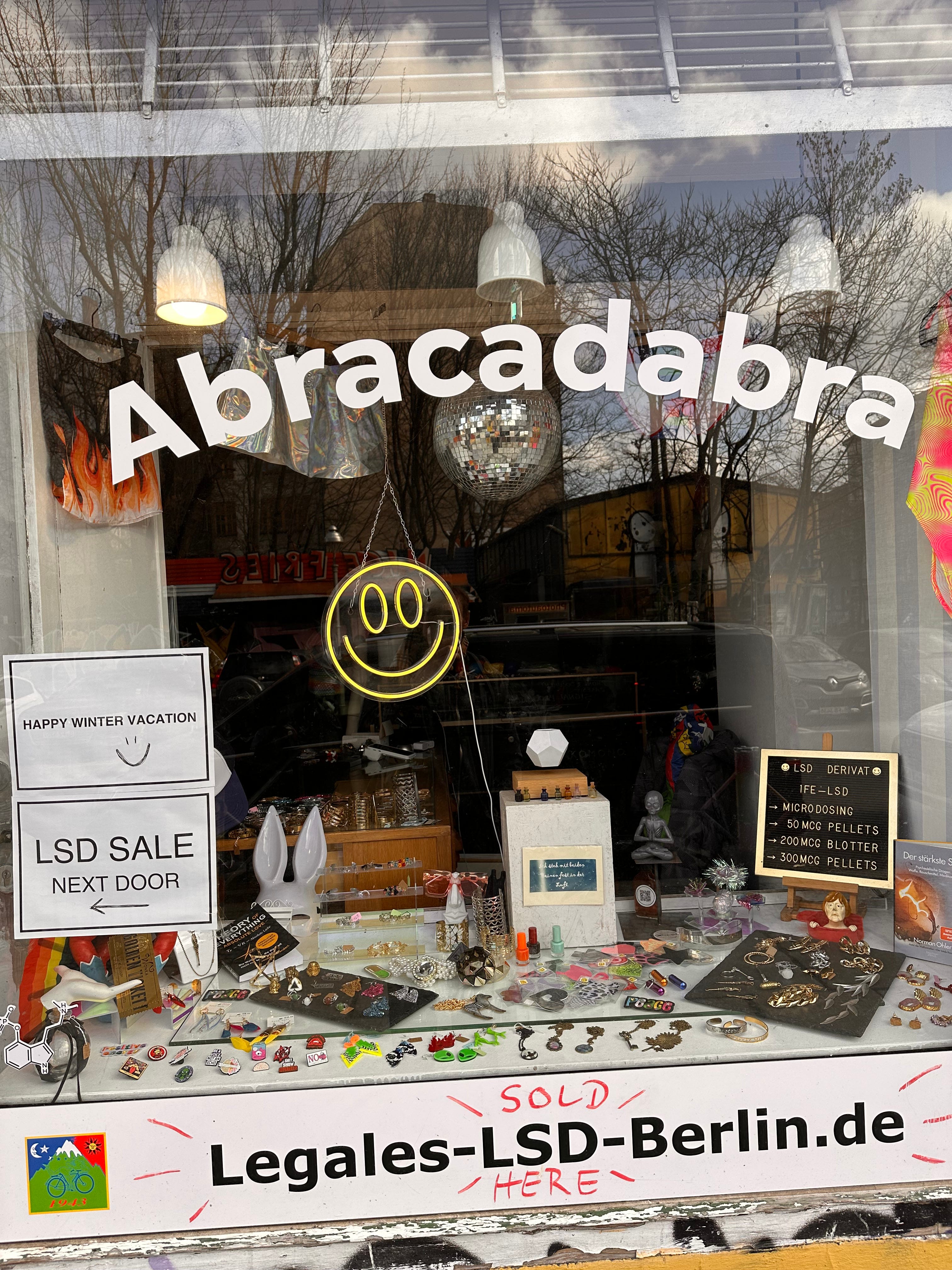
Why is it legal? Not because the state had an awakening, but because chemists learned to play chess. And Denis knows a bit about it.
Add one harmless atom to LSD — suddenly it’s legal. The molecule becomes “1P-LSD.” Ban that? Add another fragment. Another name. Another loophole. A cat-and-mouse ballet between bureaucrats and chemists.
Denis met an English chemist who reportedly made tens of millions in the Netherlands by staying one molecule ahead of the law. Each time legislators banned a compound, he added a few atoms and released the next version. Eventually the molecules grew bulkier, slower to onset, potentially less elegant — all because lawmakers outlawed the clean version first.
Prohibition does not make substances safer. It makes chemistry absurd.
The European bureaucratic reflex is always the same: ban more, ban preemptively, ban everything that looks similar. In Germany, legislators even tried to outlaw entire classes of LSD derivatives in one sweep. Ironically, Berlin’s central government hesitated — perhaps recognizing that outlawing atoms wholesale might reveal the farce.
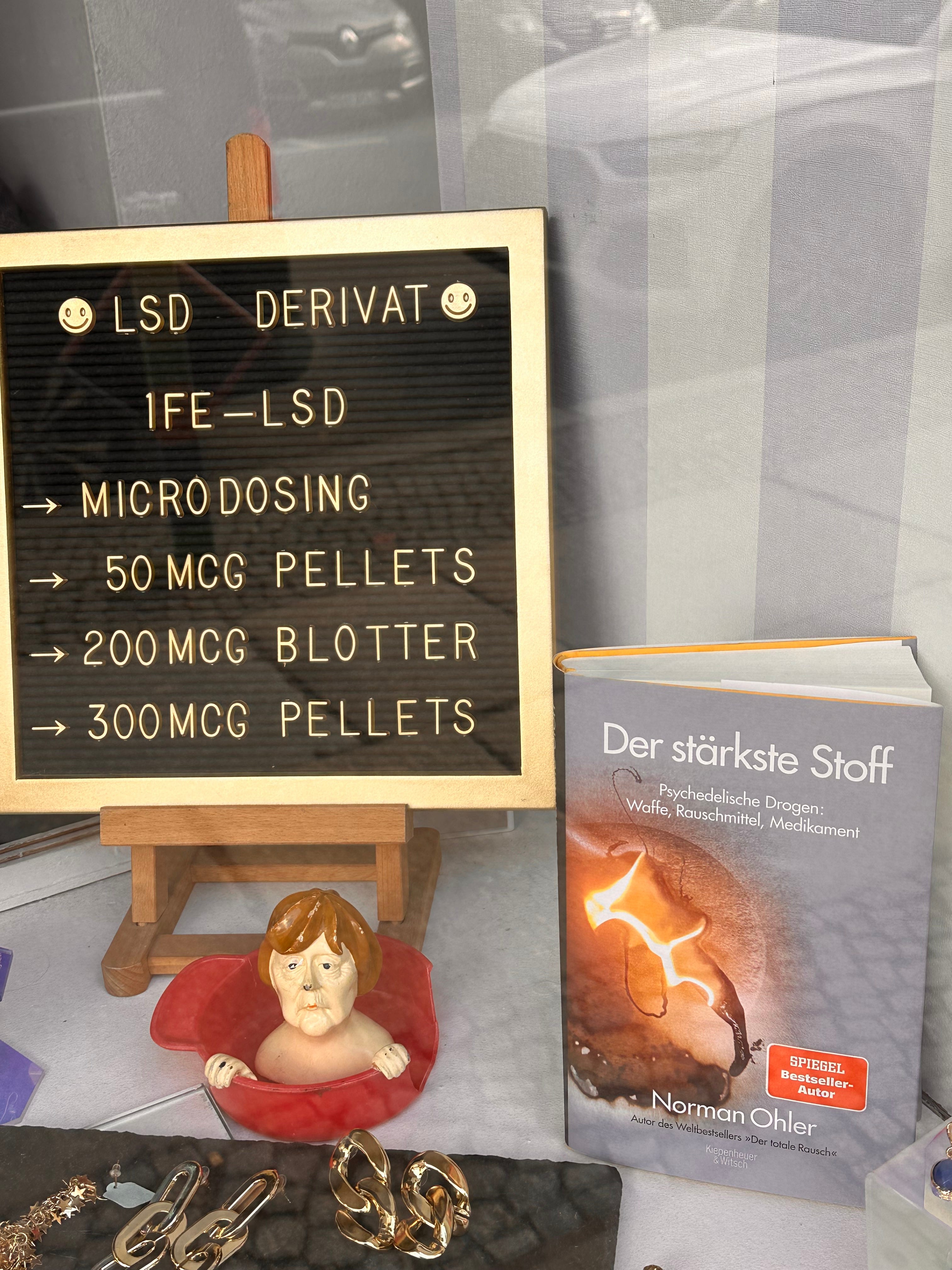
Meanwhile, millions consume these legal derivatives. And society hasn’t collapsed. No psychedelic apocalypse. No serotonin riots.
But Denis pointed out something sobering: in the 1960s, people took LSD consciously. They debated it. Wrote about it. Built alternative structures. Imagined different societies. Today, many swallow derivatives before going clubbing, sometimes mixing them with alcohol for “extra energy.” The key is used as a stimulant accessory.
The molecule survived. The movement did not.
